
I Don’t Know You
The Potato Principle and the Challenge of Writing Memoir

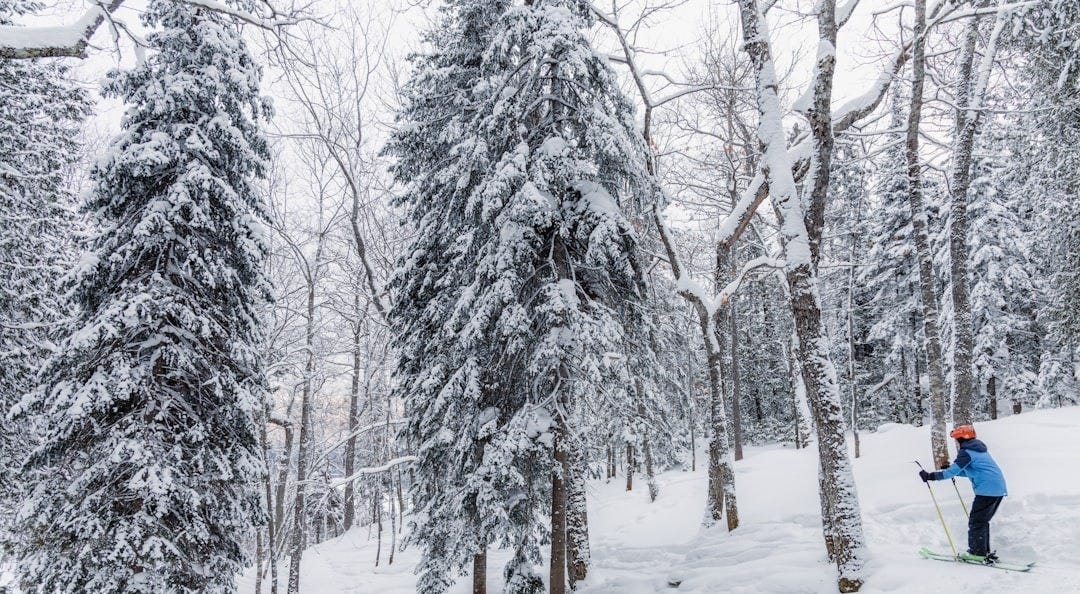
The first time Dad snapped skis to the red plastic boots on my feet, I still had all my baby teeth. He taught me to balance while sliding downhill and to make safe, wide turns that controlled my speed—all while skiing backwards. Unlike other parents who skied beside their children, Dad skied facing me, holding my hands. His skis formed a giant V; my skis, shaped like a pie, slid inside his. We looked like nested boomerangs sliding down the bright white slope. I’d mimic his large swooping path, smiling at the endless miles of snow on Mammoth Mountain.
Soon I was ready to fly solo, and I did. I took to the sport easily and swished down the bunny slopes with exuberance.
On one of those early ski trips, I got separated from my dad. Maybe he stopped to admire the sunshine that bounced off a snow-covered tree branch? Or maybe he stopped to help another child who’d fallen down? But when I reached the bottom and didn’t see him, I jumped on the chairlift by myself. I figured I’d just meet him at the top for our next run.
As the chairlift climbed higher and higher, far beyond that of my beginner runs, I realized my mistake.
Yikes! Wrong chairlift.
The chairlift I’d taken delivered me to the top of a mountain marked by a black diamond sign. I inched my way to the start of the run, the edge of a cliff, and peered down. Other skiers whizzed by me, jumping off the precipice upon which I teetered. A cold wind whipped at my face, slowing the tears that fell from my eyes. I knew I was in trouble.
I haven’t been skiing in years, but I thought about this experience recently because my memoir, Crypto Island, makes its debut on September 22, and when I started inviting close friends and family to read an advance copy, I felt like I did at seven: nervously perched at the top of a cliff I didn’t know how I was going to ski down.
This week, a family member I love and know well—I’ll call her Amanda, though that’s not her real name—met me for lunch. She had just finished my book and wanted to talk about her experience.
“...but I don’t know you,” she finally said, after kindly complimenting my literary efforts.
“What are you talking about?” I responded, confused. “You’ve known me for almost forty years!”
We finished our lunch and hugged goodbye, but her comment stayed with me. What I understood her comment to mean was that the things I wrote about in my memoir—the secrets from my youth that are revealed—surprised her. I suspect she wished I had shared these things earlier so that she didn’t learn of them for the first time while reading my book.
Underneath her words I sensed hurt. Her attempt to redefine our relationship—to one in which she didn’t really know me—came from the fact that I didn’t like to talk about my adolescence. This was a difficult time in my life, one I’d distanced myself from.
The Deeper Nature of the Self
I recently read Dark Nights of the Soul, a Substack post by Linda Joy Myers, who explains:
“Writing a memoir is about wrestling with profound truths, many of which the writer may have tried to bypass, only to find themselves stuck in the very place they wanted to avoid. The alcoholic wants to avoid pain, but remains stuck in a particular kind of hell unless/until there is a spiritual awakening. At the core of every story there is potentially an awakening to the deeper nature of the self. The soul.”
I related to Myers’s description. When I started writing my memoir, a story that focuses on my midlife relocation to Puerto Rico, I didn’t plan on writing about my scandalous youth. But these stories wouldn’t let me go—in order to understand my midlife transformation, my awakening to a new self, I needed to face past mistakes.
What obligation do we have to tell the people we love sordid details from our past? When I teach interpersonal communication, I share varied perspectives. Scholarly answers to this question fluctuate depending upon context, culture, shared values, and relationship type.
In romantic relationships, for example, self-disclosure most often happens in stages. Information about our personal histories organically reveals itself as the couple gets closer and the relationship more intimate. Sharing about our past fosters connection. That said, my answer to the "obligation" question is "no." Even in close relationships, we maintain individual selves and identities. There is no relational rule that says we must tell our partners every gritty detail about our past—and memory itself is slippery, shifting with perspective and time, which makes perfect disclosure inherently difficult.
“What happens when you forget about a potato, when you leave it in your pantry for too long?” I ask my students, who laugh in response.
“That’s right, it turns gruesome. It transforms from a potato into something otherworldly. Long spindly legs grow from its eyes and eventually, it looks like a little monster. Plus, it stinks to high heaven!”
When it comes to sensitive personal history—sharing things that might embarrass us or that we deeply regret—the Potato Principle offers guidance. What happens if the secret is discovered years after the relationship is established? Will it look like a forgotten potato? Will hiding the information now make it more difficult to reveal later? How will learning the information impact the person you love? While we all keep some parts of ourselves private, the Potato Principle may help guide our decisions around sensitive information sharing. The good news is: making ourselves vulnerable to the people we love has the potential to increase intimacy and build trust in our relationships.
The Forgotten Potato
A few weeks ago, I listened to a fantastic interview on the podcast Let’s Talk Memoir. The podcast host, Ronit Plank, asked writer Melissa Febos about her book, The Dry Season, which examines Febos’s relationship to intimacy. Febos shared:
“Almost everything I’ve ever written was something I didn’t want to say out loud…I couldn’t have imagined divulging it to a large number of people, but that goes hand in hand with something that is meaty and profound…”
Memoir gives us a candid peek into the life of another. In contrast to an autobiography, memoir reveals a slice of one’s life and often explores extremely personal subject matter. Flashbacks are common in memoir since they provide context, deepen the story’s themes, and can move the narrative along. The flashbacks included in my story reveal experiences that are now forty years old. They are included because they inform my personal transformation—a hallmark of memoir writing. Flashbacks I share helped me make sense of my changing identity and my relationship with home, love, and risk-taking. In Crypto Island, I examined the way my past informed my present, which is why sharing past trauma and mistakes mattered to the book.
It never occurred to me that the secrets from my youth would present like a forgotten potato to Amanda, but that’s exactly what happened.
In hindsight, I wish I had talked with her about the sensitive subject matter in my memoir before I let her read about them. Even though Amanda knows me well now, she never really knew the teenage me. I’m not suggesting every memoirist owes this conversation in advance—when it comes to past trauma or scandal, that’s a lot to ask of a writer. But be prepared memoirist sisters: the people you love may have complicated feelings about a delayed reveal.
I don’t regret writing things down. Nor do I feel remorse about being vulnerable on the page. One thing I’ve learned about middle age is that I’m done with pretending, with playing small, with living a guarded, sanitized life. Societal expectations be damned. My goal now is to strive for authenticity and to give others permission to do the same. For years I have asked my students to be vulnerable with me, to write self-reflexive papers about identity and family dynamics. I know that my stories of trauma and joy are just like theirs, just like so many women’s experiences, full of pain and transformation.
Take the Risk
I stood at the edge of that black diamond ski run for a long while. This time, there was no one to ski backwards or hold my hands. I knew it was harder than any other slope I had dared before, but finally, I shoved my poles into the snow and pushed off the edge. It took me a long time to get down, falling and crying and getting back up, but I made it. I learned that even really hard things are possible, if you just take them one steep, twisty turn at a time—and that going down the mountain is how you find out you’re braver than you knew.
Now it’s your turn! Hit the ♡ below 👇if this post resonated with you.
And I'd love to hear about your experiences: Is there something in your own life that's turned into a "forgotten potato" — something you meant to share but didn't, and it grew stranger with time? Or, have you ever been on the receiving side of a delayed reveal?
Life Talk is free, but if you’d like to support my work, consider pre-ordering my debut memoir, Crypto Island: A Memoir of Midlife Relocation to Puerto Rico, arriving from She Writes Press in September 2026. Pre-orders matter more than most people realize. They shape how a book enters the world because they signal to booksellers that readers are waiting. Pre-order your copy wherever books are sold — it means more than I can say. 😊
How stunningly relatable, Georgine. I had quite a few Amandas come at me when I wrote my memoir. It's funny how people react, isn't it? Even when someone was in the memory with me, their recollection was completely different from mine. That's memoir. No two people will experience the same event in quite the same way. I'd often point out, well, that's how I remember it, but feel free to write your own memoir about it ;) You can never please everyone, and we shouldn't have to. A brilliant read. Best of luck with the success of your memoir. Well done for getting it out into the world. :) (I smiled at your potato theory. How appropriate :))
Great story about bravery and possibilities and helpful to reveal the unexpected outcomes of putting your life on paper. There are many versions of ourselves and you so beautifully illustrate that with words in your memoir both in how you view key people in your journey and in yourself. The knowing of a person is a truly complicated endeavor, the revealing of our most vulnerable selves in writing is a gift to both ourselves and the universe who want to seek the knowing.